

Accounting & Tax Compliance in Croatia
Statutory accounts, VAT returns, and corporate tax filings aligned with the Croatian Accounting Act, including 2026 e-invoicing and fiscalisation compliance.
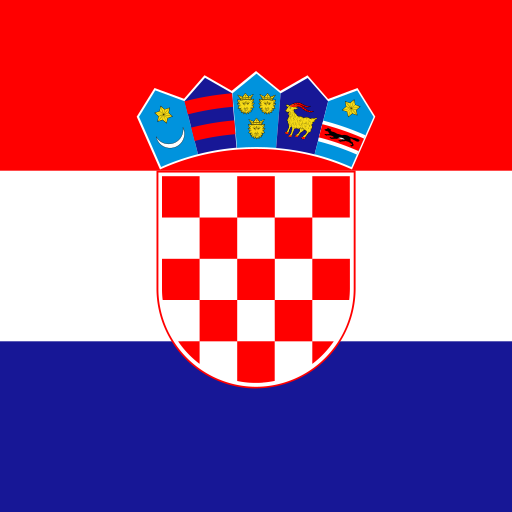 Croatia
Currency
EUR (eurozone member since January 2023)
Corporate tax rate
10% for revenue up to €1M · 18% above €1M
VAT standard rate
25%
Legal forms
D.o.o. · J.d.o.o.
Bookkeeping standard
Croatian Financial Reporting Standards, or IFRS for large entities
Annual filing
Annual accounts filed with the FINA register within 4 months of year-end
How accounting and tax compliance work in Croatia
Croatia applies a two-tier corporate income tax system: 10% for companies with annual revenue up to €1 million, and 18% above that threshold — among the more competitive structures in the EU for small and mid-sized operations. The d.o.o., Croatia's standard limited liability company, requires approximately €2,654 in minimum share capital (the euro-converted equivalent of the prior HRK 20,000 requirement) and typically registers within 1 to 2 weeks via the HITRO.HR one-stop platform.
Operating in Croatia combines full eurozone integration since 2023 with a social contribution structure unusual in the EU — employers carry a comparatively light direct contribution burden, but total payroll planning must still account for the full employee-side deduction, which is substantial.
Discuss your Croatia accounting setupRate structure and what it applies to
10% for revenue up to €1M · 18% above €1M
- Pension contributions entirely employee-side — — 20% of gross salary (15% first pillar, 5% second pillar funded), unlike most EU markets where employers share this cost
- Mandatory e-invoicing and real-time fiscalisation — for B2B, B2G and, from 2026, B2C transactions including bank transfer payments
- Progressive pension contribution base — for lower salary bands, with the calculation method changing at defined gross salary thresholds (€700, €1,300)
- Disability employment quota — — companies with 20+ employees must employ a prescribed share of disabled individuals or pay a monthly compensation fee per unfilled position
Rates that apply in Croatia
| Rate | Applies to |
|---|---|
| 25% | Standard rate — most goods and services |
| 13% and 5% | Reduced rate(s) — defined categories of goods and services |
Croatian Financial Reporting Standards, or IFRS for large entities, and when an audit is required
Statutory bookkeeping in Croatia follows Croatian Financial Reporting Standards, or IFRS for large entities. Statutory audit mandatory above 2 of 3 thresholds: €5.5M balance sheet, €11M turnover, 50 employees — aligned with EU harmonized thresholds.
Confirm your audit obligationAnnual accounts and registration
Annual accounts filed with the FINA register within 4 months of year-end.
Entity registration runs through the Commercial Court Register, via the HITRO.HR one-stop platform, typically taking 1–2 weeks.
Plan your filing calendarFrequently asked questions
Talk to a Croatia accounting expert
Companies modelling Croatian employment cost using assumptions from markets with employer-heavy pension contributions consistently understate net salary requirements and overstate employer-side cost. The reality is closer to the reverse: Croatia's employer contribution is genuinely light, but the employee-side deduction is substantial and should be communicated clearly when setting gross salary expectations with candidates.